Best Dark Web Monitoring Services (2026): What's Worth Paying For

Dark web monitoring is one of the most heavily marketed features in identity protection, and one of the most misunderstood. It's worth being blunt about what it actually does.
It's detection, not protection. These services scan breach dumps, criminal marketplaces and paste sites for your details, then tell you when something turns up. That's genuinely useful — but it doesn't prevent anything, and nothing can remove your data once it's out there. Any service implying otherwise is overselling.
Free breach check
“See what's already exposed — no signup”
Our free checker tells you which known breaches contain your email address. It's the sensible starting point: find out whether you have a problem before paying anyone to watch for one.
Free · instant · no account needed
Aura
“Dark web alerts inside a full protection plan”
Continuous monitoring for your email, SSN, phone and card numbers — backed by 3-bureau credit monitoring, $1M identity theft insurance and US-based restoration help. The monitoring is only half of what you're paying for, which is the point.
From ~$12/mo · monitoring + insurance
Have I Been Pwned
“The respected free breach database”
A long-running, well-regarded free service that checks your email against known breaches and can notify you about future ones. Email-focused only — no SSN or card monitoring, no insurance, no recovery help.
Free · email only
Some links are affiliate links. We may earn a commission at no extra cost to you — it never affects our rankings.
Independently tested
We compared what dark web monitoring actually delivers versus what it claims
No pay-for-placement
Rankings are never sold
Reviewed by an expert
Jay Dabhi, Cybersecurity Analyst & Co-Founder
Updated July 2026
Prices & picks re-checked
What dark web monitoring can and can't do
What it can do:
- Tell you your credentials appeared in a known breach dump
- Alert you when a Social Security number, phone number or card number surfaces
- Give you a head start — change passwords or freeze credit before the data is used
What it can't do:
- Remove your data. Once it's circulating, it's unrecoverable. Copies sit on systems nobody controls.
- See everything. No service indexes the whole dark web. Private forums and closed sales are invisible to all of them.
- Prevent anything. It's an alarm, not a lock.
That last point drives the whole recommendation. An alarm has value only if you act on it — and only if it comes with something that helps you act.
The honest test: is it worth paying for?
Ask what you get beyond the scan.
A service that only scans and emails you is doing something free tools largely cover. Paying $10+/month for alerts alone is poor value.
It becomes worthwhile when the alert arrives attached to:
- SSN and identity monitoring — exposure beyond your email address
- 3-bureau credit monitoring — catching a fraudulent account at any bureau
- Identity theft insurance — covering losses and legal costs
- Restoration support — someone who handles the recovery paperwork with you
So the buying rule is simple: don't buy dark web monitoring. Buy a plan that includes it.
Want full protection beyond link checks? Aura monitors threats, blocks phishing & protects your identity — all in one app. Save up to 63% today.
Get Aura →The picks
1. Free breach check — start here
Before paying anyone, find out where you stand. Our free email breach checker shows which known breaches contain your address, instantly and without an account. Have I Been Pwned is an excellent free alternative with future-breach notifications.
If you come back clean, you have less to worry about than the marketing suggests. If you show up in several breaches — which is common — the fixes below cost nothing.
2. Aura — best paid option, because of what surrounds the monitoring
Aura monitors your email addresses, SSN, phone number and card numbers continuously and alerts you when they surface. What makes it worth paying for is the rest of the plan: 3-bureau credit monitoring on every tier, $1M identity theft insurance per adult, and US-based restoration support when something actually goes wrong.
From about $12/month on the Individual tier. Covering two adults? The Couple plan costs less than two Individual plans.
- Pros: monitoring goes well beyond email; 3-bureau on every tier; insurance and real recovery help; 60-day money-back guarantee.
- Cons: you're buying a whole suite — if you genuinely only want dark web alerts, free tools cover most of it.
3. Have I Been Pwned — the free standard
Long-running, well-respected, and free. Checks your email against known breaches and can notify you when new ones land. Email-only — no SSN, card or identity monitoring, no insurance, no recovery help.
Best for: anyone who wants breach awareness at zero cost and will act on alerts themselves.
What to do when your data shows up
Finding yourself in a breach is normal and not an emergency. Work through this:
- Change the password on the affected account, and anywhere you reused it. Reuse is what turns one breach into several compromised accounts. Check yours with our password strength checker.
- Turn on two-factor authentication. This alone makes a leaked password largely useless.
- Freeze your credit if an SSN was exposed — it's free at all three bureaus and blocks most new-account fraud.
- Watch existing accounts for unfamiliar charges or login notifications.
- If fraud has already happened, report it at IdentityTheft.gov for an official recovery plan.
Every step above is free. That's the honest hierarchy: free actions first, paid monitoring for the gaps they leave.
 Recommended
All-in-one identity protection with $1M Insurance, credit monitoring, VPN & antivirus. From $10/mo · save up to 63%.
* Affiliate link. We may earn a commission at no extra cost to you.
Bottom line
- Everyone: run a free breach check. No reason not to.
- Exposed and want to act: change passwords, enable 2FA, freeze your credit. All free.
- Want ongoing coverage plus insurance and recovery help: Aura from about $12/month.
- Want alerts only: stick with free tools. Standalone dark web monitoring isn't worth paying for.
Aura is direct-to-pay with no free trial, but annual plans include a 60-day money-back guarantee. For the full value question, see is Aura worth it?.
 Recommended
Award-Winning Online Safety — All in One Place
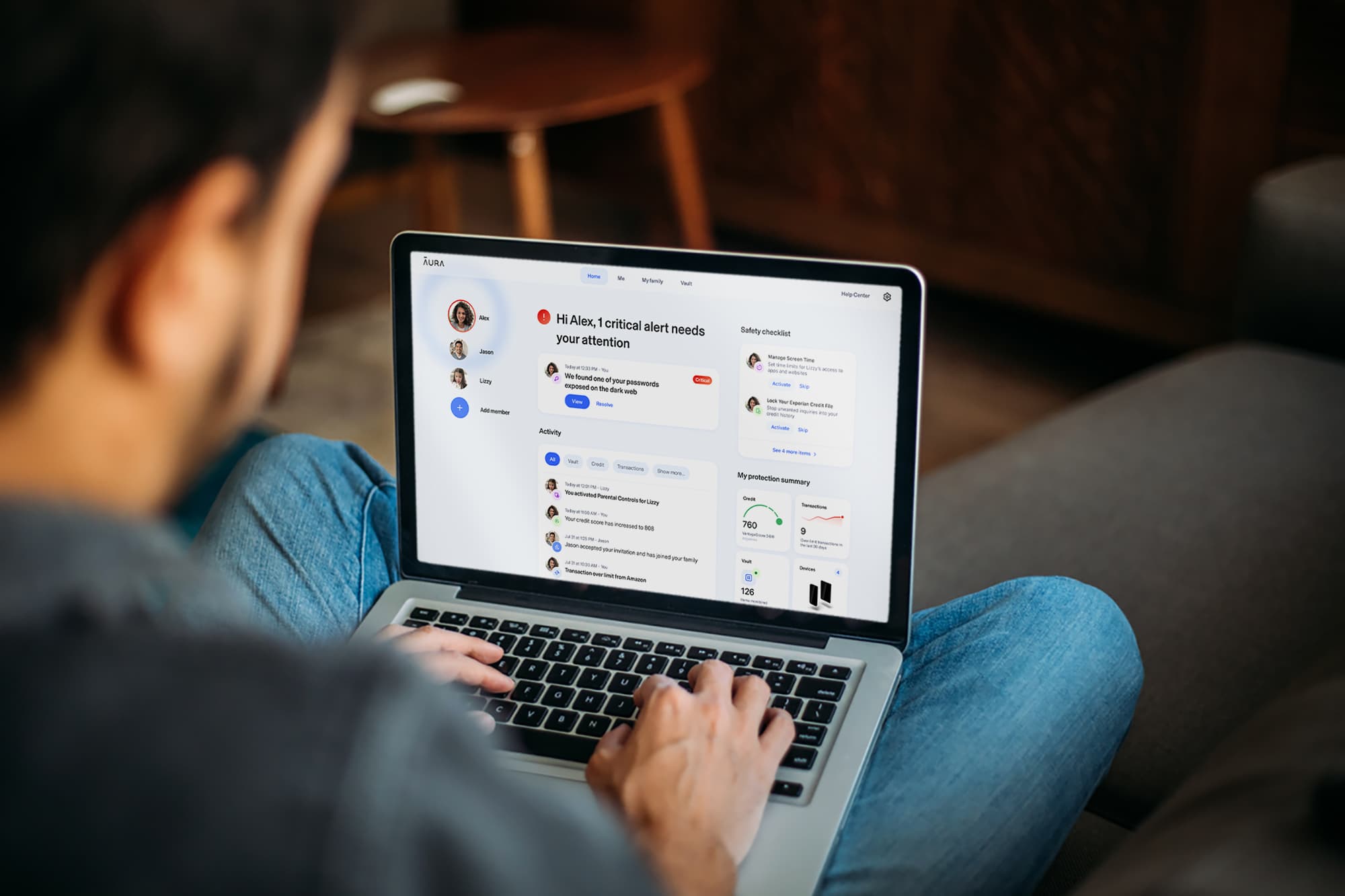
Aura brings together everything you need to stay safe online — identity monitoring, credit protection, VPN, antivirus, and a password manager — in a single, easy-to-use platform. Ranked best in class by Forbes Advisor, US News, and Money.
$1M
Identity Insurance per adult
3
Credit bureaus monitored
4.6★
Trustpilot rating
24/7
U.S.-based expert support
* Affiliate link. We may earn a commission at no extra cost to you.
Sources & References
Frequently Asked Questions
What is dark web monitoring and how does it work?
Dark web monitoring services scan breach dumps, criminal forums and paste sites for your personal details — email addresses, passwords, Social Security number, phone number and card numbers — and alert you when something appears. It's detection, not prevention: it tells you your data is already circulating so you can change passwords, freeze credit, or watch accounts before the information gets used.
Is dark web monitoring actually worth paying for?
On its own, not really — a paid service that only scans and alerts is doing something free tools largely cover. It becomes worth paying for as part of a wider plan that adds SSN monitoring, 3-bureau credit monitoring, identity theft insurance and restoration help. Buy the whole package or don't buy at all; standalone dark web monitoring is the weakest thing you can spend money on here.
Can dark web monitoring remove my data from the dark web?
No, and any service claiming it can is misleading you. Once data is in circulation it cannot be recalled or deleted — copies are distributed across systems nobody controls. Monitoring only tells you it's out there. What you can change is the data's usefulness: new passwords, a credit freeze, and two-factor authentication make leaked credentials far less valuable.
Are free dark web scans good enough?
Free scans are genuinely useful and everyone should run one. They tell you which known breaches already contain your email. What they don't do is monitor continuously for new exposure, cover data beyond your email address such as your SSN or card numbers, or help you recover if your identity is actually misused. Start free, then decide if those gaps matter to you.
What should I do if my information is found on the dark web?
Change the password on the affected account and anywhere you reused it, and turn on two-factor authentication. If a Social Security number was exposed, freeze your credit at all three bureaus — it's free and blocks most new-account fraud. Then watch existing accounts for unfamiliar activity. Finding your data in a breach is common and isn't itself an emergency; acting on it quickly is what matters.