7 Best Identity Theft Protection Services (2026, Ranked)

Editorial disclosure: We independently research, test, and rate the products we recommend using our own rating methodology. If you buy through our links, we may earn a commission — at no extra cost to you. Read our rating methodology and how we make money.
Identity theft is one of the fastest-growing online threats — stolen passwords, leaked data, and new-account fraud can wreck your finances before you notice. The right identity theft protection service detects it early, insures your losses, and helps you recover.
There are dozens of services all promising the same thing. We compared more than a dozen of them on the five things that actually matter when fraud hits — monitoring breadth, insurance, recovery help, added device security, and price-for-what's-included — to find the 7 best identity theft protection services in 2026. Here are our top picks first, then the full ranking.
Aura
“All-in-one identity, credit & device protection”
The most complete protection for most people — 3-bureau credit monitoring, up to $1M insurance per adult, real recovery specialists, plus a VPN, antivirus and password manager in one app.
$1M insurance · 3-bureau · VPN + antivirus included
Zander
“$1M insurance at a rock-bottom price”
Endorsed by Dave Ramsey, Zander keeps it simple: monitoring, recovery and $1M insurance for less than most rivals. Fewer bells and whistles, but the safety net that matters is all there.
Cheapest entry with $1M insurance
Credit Karma
“Free credit & breach monitoring”
Great for watching your credit score and getting breach alerts at $0 — just remember free tools can't insure your losses or help you recover, which is the whole point of a paid service.
Free forever · no insurance or recovery
Some links are affiliate links. We may earn a commission at no extra cost to you — it never affects our rankings.
Independently tested
We compared more than a dozen identity theft protection services
No pay-for-placement
Rankings are never sold
Reviewed by an expert
Jay Dabhi, Cybersecurity Analyst & Co-Founder
Updated July 2026
Prices & picks re-checked
Before you pay for anything, it's worth knowing where you stand: check whether your email is already in a data breach — for most people it is, which is exactly why the services below exist.
Has your email been in a data breach?
Check your email address against known data breaches in seconds. See which breaches exposed it and exactly what data was leaked — free, no sign-up required.
The 7 best identity theft protection services at a glance
| # | Service | Best for | Monitoring | Insurance |
|---|---|---|---|---|
| 🥇 | Aura | All-in-one protection | 3-bureau | Up to $1M/adult |
| 🥈 | Norton LifeLock | Best-known brand | Credit + fraud | Varies by plan |
| 🥉 | IdentityForce | Deep monitoring | Extensive | $1M |
| 4 | Identity Guard | AI-powered alerts | Tiered | Up to $1M |
| 5 | IdentityIQ | Credit-report access | 1–3 bureau | $1M |
| 6 | Experian | Bureau-native credit | Experian-native | Up to $1M |
| 7 | Zander | Budget + insurance | Basic | $1M |
How we ranked them
Every service here was scored on:
- Monitoring breadth — how many credit bureaus (1 vs 3) and data sources
- Identity theft insurance — coverage amount per adult
- Recovery support — real specialists vs a help article
- Added security — VPN, antivirus, password manager included?
- Ease of use and price-for-what's-included
The winner isn't the longest feature list — it's the most protection per dollar, with the least hassle.
🥇 1. Aura — Best Overall Identity Theft Protection
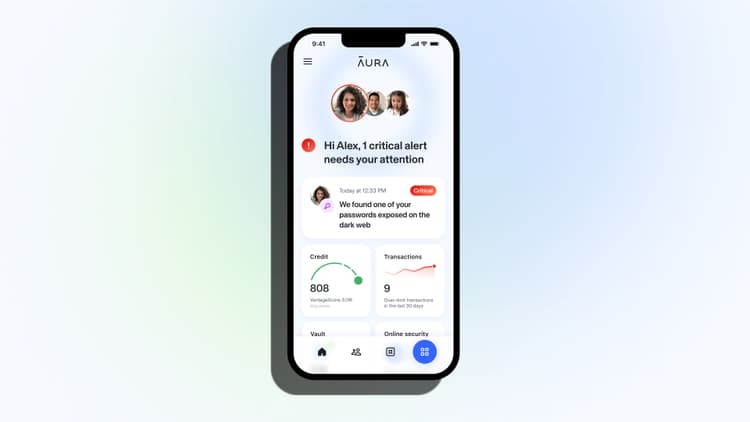
Aura is the most complete option for most people. Instead of just watching your credit, it bundles identity monitoring, 3-bureau credit monitoring, up to $1M insurance per adult, real recovery specialists, a VPN, antivirus, and a password manager into one plan.
Aura

“I've dug into every major identity service, and Aura is the one I actually run at home. It's the rare all-in-one that doesn't cut corners — real 3-bureau monitoring, a genuine $1M insurance policy, and device security bundled in, without making you juggle five apps.”
— Jay Dabhi, Cybersecurity Analyst & Co-Founder
- 3 bureaus, not 1 — daily monitoring across Experian, Equifax and TransUnion
- Up to $1M insurance per adult plus real human recovery specialists
- VPN, antivirus & password manager included — not paid add-ons
- One simple app the whole family can actually use
Affiliate link · we may earn a commission at no extra cost to you.
How we rated Aura
Pros
- Daily 3-bureau credit monitoring (not just one)
- Up to $1 million identity theft insurance per adult
- Device security (VPN + antivirus) included, not an add-on
- Genuinely easy single-app dashboard; strong family plan
Cons
- Not the rock-bottom sticker price (but usually cheapest all-in)
Best for: anyone who wants complete identity + device protection in one place.
👉 Full breakdown: our in-depth Aura review, pricing guide, and is Aura worth it?

 Recommended
Smart, Simple Online Safety.
Powered by AI.
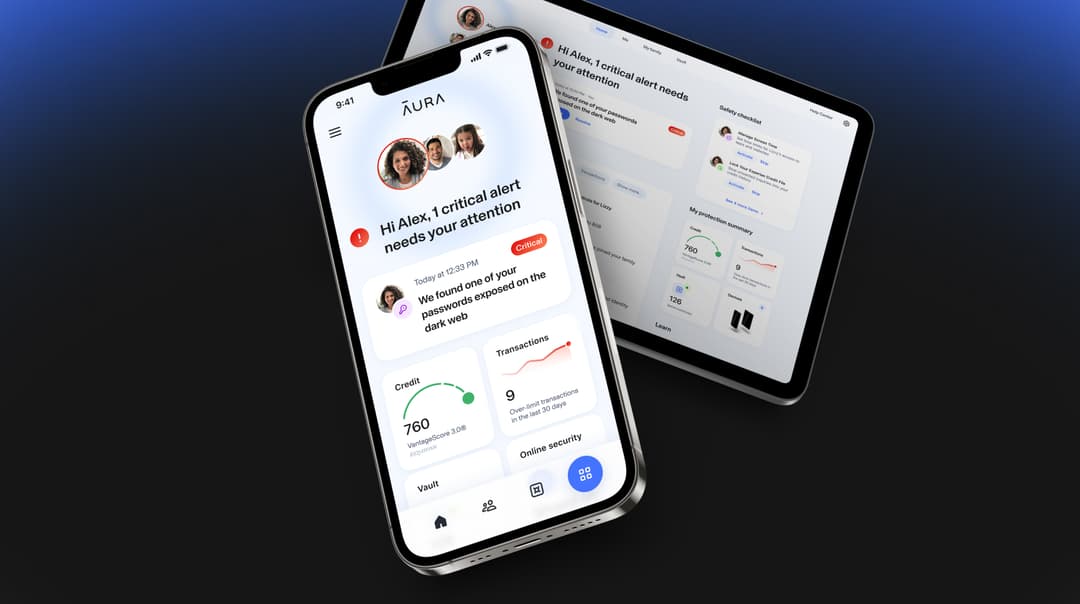
Aura monitors your identity, credit, and financial accounts 24/7 — and alerts you the moment something changes. Every plan includes $1M Identity Theft Insurance.
* Affiliate link. We may earn a commission at no extra cost to you.
🥈 2. Norton LifeLock — Best-Known Brand
LifeLock (now part of Norton) is the most recognized name in the category, pairing identity monitoring with Norton's device security.
Pros: strong brand, credit + fraud alerts, bundles with Norton 360. Cons: tiered pricing climbs quickly; insurance and features vary a lot by plan.
Best for: people who want a household name and already use Norton. See our head-to-head: Aura vs Norton LifeLock.
🥉 3. IdentityForce — Best for Deep Monitoring
IdentityForce is a monitoring powerhouse with a long feature list and solid recovery support.
Pros: extensive monitoring signals, good restoration help, $1M insurance. Cons: interface feels dated; pricier once you match Aura's bundle.
Best for: monitoring maximalists. Compare: Aura vs IdentityForce.
4. Identity Guard — Best AI-Powered Alerts
Identity Guard leans on AI to surface the risks that matter and cut alert noise.
Pros: smart risk alerts, good value on lower tiers, easy to use. Cons: lower tiers thin on credit monitoring; device security limited.
Best for: people who want simple, prioritized alerts. Compare: Aura vs Identity Guard.
5. IdentityIQ — Best for Credit-Report Access
IdentityIQ centers on credit monitoring and frequent credit-report access.
Pros: strong credit features, competitive entry price. Cons: cheapest tier is single-bureau; VPN/antivirus are add-ons. Compare: Aura vs IdentityIQ.
Best for: credit-focused users who read their reports often.
6. Experian IdentityWorks — Best Credit-Bureau-Native Option
As one of the three credit bureaus, Experian offers credit-native monitoring and FICO score tracking.
Pros: direct bureau data, FICO scores, solid credit tools. Cons: identity/device protection narrower than an all-in-one. Compare: Aura vs Experian IdentityWorks.
Best for: users mainly worried about credit-file fraud.
7. Zander — Best Budget / Insurance-First Pick
Zander (endorsed by Dave Ramsey) keeps it simple: monitoring, recovery, and $1M insurance at a low price.
Pros: cheapest entry with insurance, no-frills, family plan value. Cons: limited proactive credit monitoring; VPN/antivirus only on higher tier. Compare: Aura vs Zander.
Best for: budget-focused households that want insurance over bells and whistles.
Free vs paid identity protection
Free tools (like Credit Karma) watch your score and flag breaches — useful, and worth using. But they can't insure your losses or help you recover. That gap is the whole point of a paid service. We spell it out in Aura vs Credit Karma.
Why all-in-one protection matters
Modern threats are connected: a phishing link steals a password → reused password compromises other accounts → a breach exposes your identity. Stitching together separate tools leaves gaps. All-in-one platforms like Aura close them — which is why it tops this list.
 Recommended
All-in-one identity protection with $1M Insurance, credit monitoring, VPN & antivirus. From $10/mo · save up to 63%.
* Affiliate link. We may earn a commission at no extra cost to you.
Final verdict
- Best overall → Aura (all-in-one, 3-bureau, $1M, VPN/AV included)
- Best-known brand → Norton LifeLock
- Deepest monitoring → IdentityForce
- Smart AI alerts → Identity Guard
- Credit-report access → IdentityIQ
- Bureau-native → Experian
- Budget/insurance-first → Zander
For most people, an all-in-one service like Aura offers the best balance of protection, simplicity, and value. Still deciding if you need it at all? Start with Do I Need Identity Theft Protection?
Sources & References
Frequently Asked Questions
What is the best identity theft protection service in 2026?
For most people, Aura is the best identity theft protection service in 2026 because it bundles 3-bureau credit monitoring, up to $1 million in insurance per adult, real recovery specialists, plus a VPN, antivirus, and password manager in one plan. If your priority is a single feature — say, credit-bureau-native monitoring — a specialist like Experian may suit you, but Aura offers the best all-round protection and value.
How did we rank these identity theft protection services?
We ranked on breadth of monitoring (how many credit bureaus and data sources), identity theft insurance amount, quality of recovery/restoration support, added device security (VPN/antivirus), ease of use, and price-for-what's-included. The winner isn't the one with the longest feature list — it's the one that protects the most for the money with the least hassle.
Do I really need identity theft protection?
If your data has been in a breach — and most people's has — identity theft protection is worth it. It won't stop every scam, but it detects fraud early, insures your losses, and gives you a specialist to help unwind it. That safety net is exactly what free monitoring tools leave out.
Is free identity theft protection enough?
Free tools like Credit Karma are fine for watching your credit score, but they can't insure your losses or help you recover. For the few dollars a month a paid service costs, you get the part that matters most when something actually goes wrong: insurance and hands-on recovery.